
Battery simulation software
for battery R&D teams
Faster answers from simulation, fewer cycles on the bench
Battery development still moves at the speed of physical testing. Every design question, every protocol change, every new cell chemistry sends teams back to the cycler for weeks or months of validation. The bottleneck is rarely the physics. It is the gap between experimental data, model parameterization, and repeatable simulation workflows that teams can actually share and trust.
Book a demo →
TRUSTED BY

“Ionworks took an open-ended problem and helped us to quickly identify the best course of action, delivering a tailored model of our system.”

— Dr. Ali Firouzi, CTO, Sonocharge

“Ionworks enables our R&D Services customers with tools and insight that support faster development and more predictable outcomes.”

— Dr. Stephen Glazier, Director of Cell Technology, NOVONIX BTS

“Ionworks gives our customers the tools to reduce their development time and cost to implement Iontra Charge Control protocols in their products.”
— Manoj Koul, CTO, Iontra
Built by the team behind PyBaMM
Ionworks was founded by the creators and maintainers of PyBaMM, the open-source battery modeling package used across academic research and industry R&D. Ionworks Studio brings that same electrochemical modeling depth into a coordinated web environment built for R&D teams.
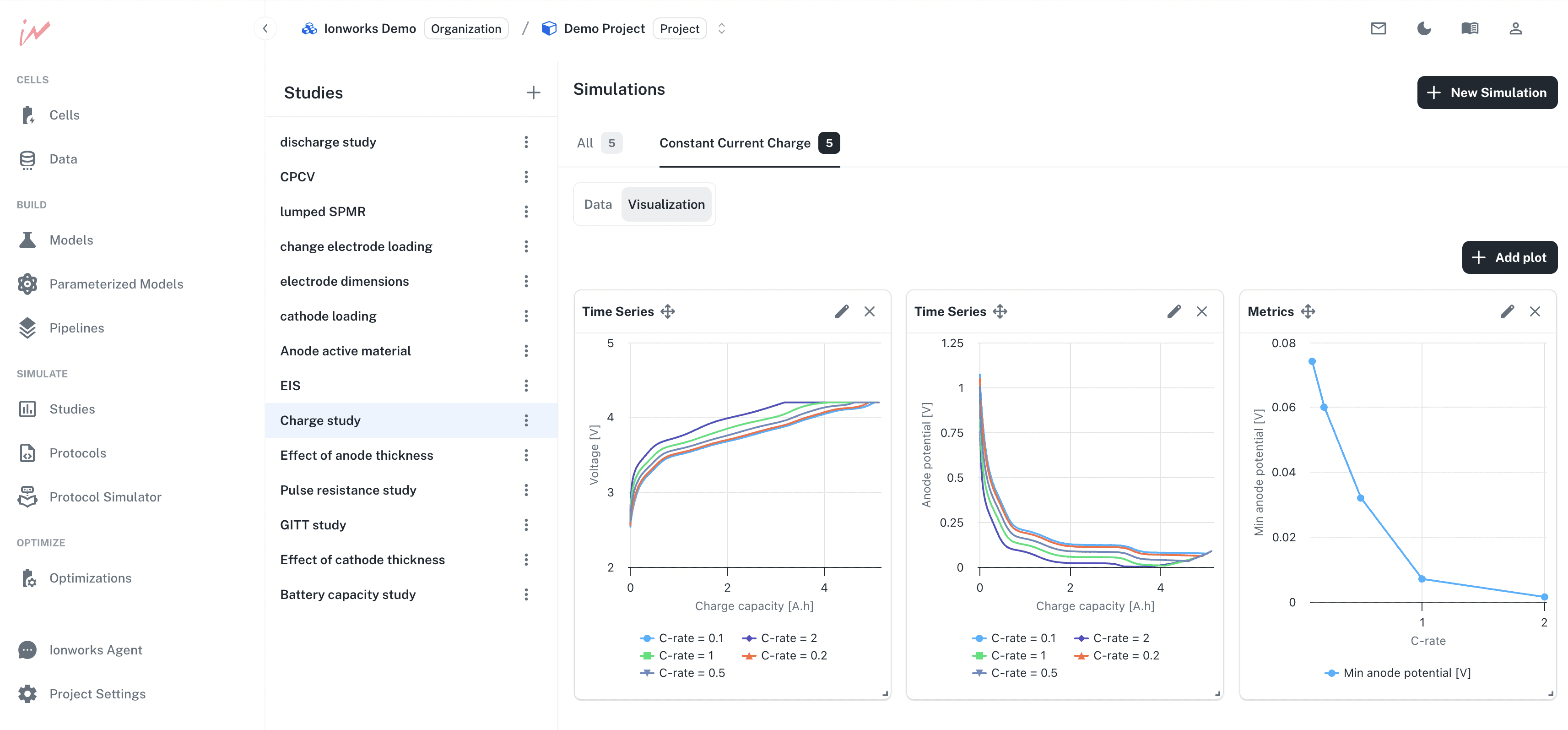
The core workflow follows four stages: Measure → Train → Predict → Optimize. Each maps to a concrete step in battery development, from raw cycler data to validated models to optimized designs.
The problem with battery simulation today
Battery R&D teams need software that understands the structure of battery data, models, and experimental protocols. Not a generic simulation platform that promises speed and optimization in the abstract.
THE CHALLENGE
WHAT IONWORKS DOES
Fragmented test data
Each cycler vendor uses its own file structure and conventions. Teams lose time reformatting files instead of analyzing results.
Structured measurement data
Test data stays linked to its cell, its experimental context, and its provenance. Every downstream analysis starts from a consistent foundation.
Parameterization bottlenecks
A `DFN` or `SPMe` model is only as useful as its parameters. Connecting experimental data to a model, fitting parameters, and validating the result is manual, error-prone work.
Parameterized models
A model (such as `DFN` or `SPMe`), a validated parameter set, and a cell specification combined into a single reusable object. Ionworks Studio calls this a parameterized model — the unit of work that makes simulations reproducible.
Slow build-test-iterate cycles
A single fast-charge protocol study can tie up cycler channels for weeks. Simulation could answer the same question in minutes.
Protocol-driven simulations
Charge at `1C` to `4.2V`, rest 10 minutes, discharge at `C/3`. Simulation software should accept the same protocol formats your team already uses — saved, typed, or uploaded from a cycler file.
PyBaMM does not operationalize itself
Running a simulation in a notebook is straightforward. Turning that notebook into a repeatable, traceable workflow that a mixed-skill team can use across projects is a different problem entirely.
Reproducibility and coordination
When a colleague runs the same parameterized model against the same protocol, the result should match. Immutable models and simulation reuse mean teams can compare results without second-guessing inputs.
How Ionworks works
Measure
→
Train
→
Predict
→
Optimize
01
Measure
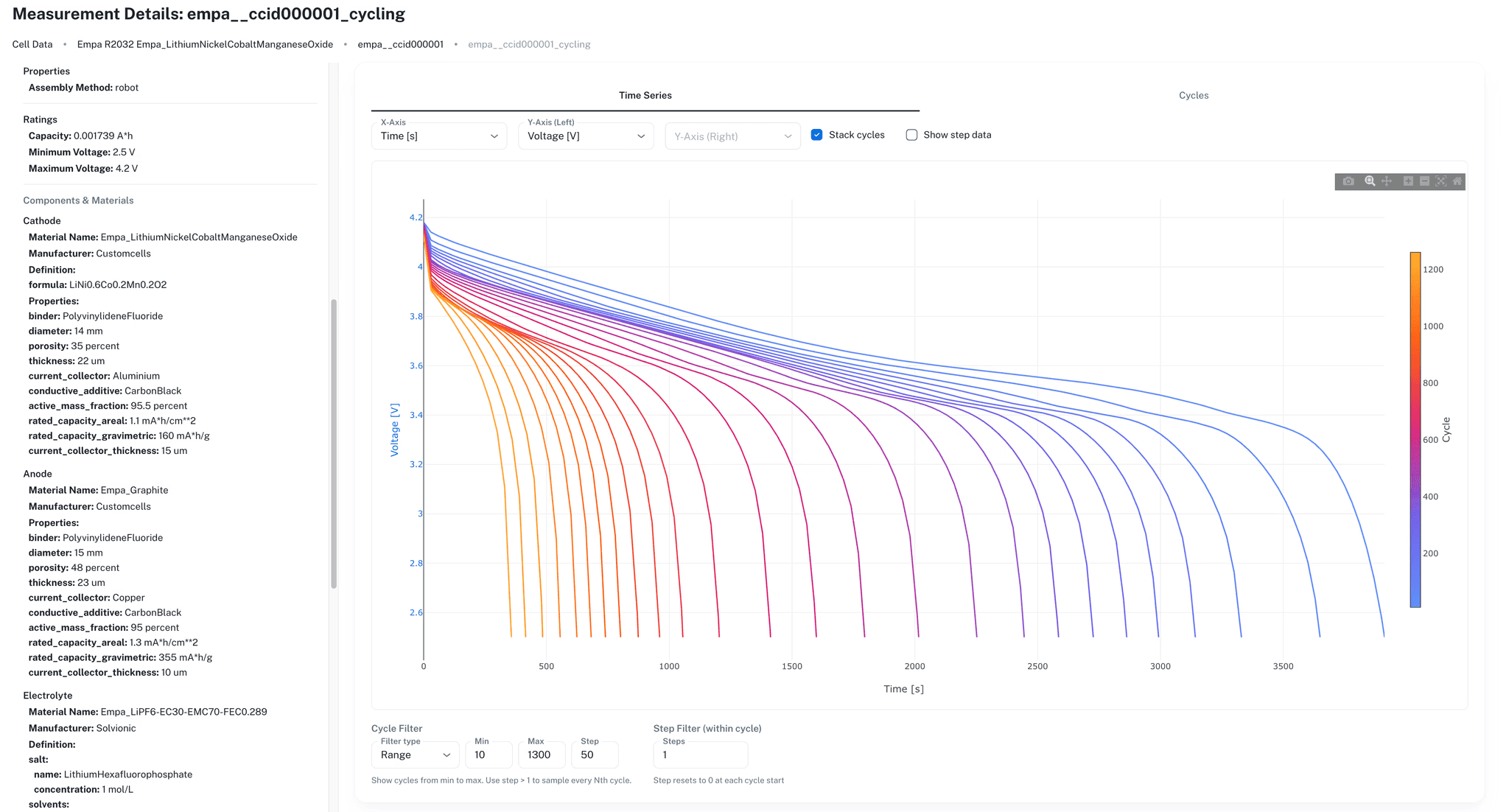
Ingest and harmonize data from all the major cyclers (`Maccor`, `Neware`, `Novonix`, `Arbin`, `BioLogic`). Cycler files are normalized into a consistent format and linked to their cell and experimental context.
02
Train
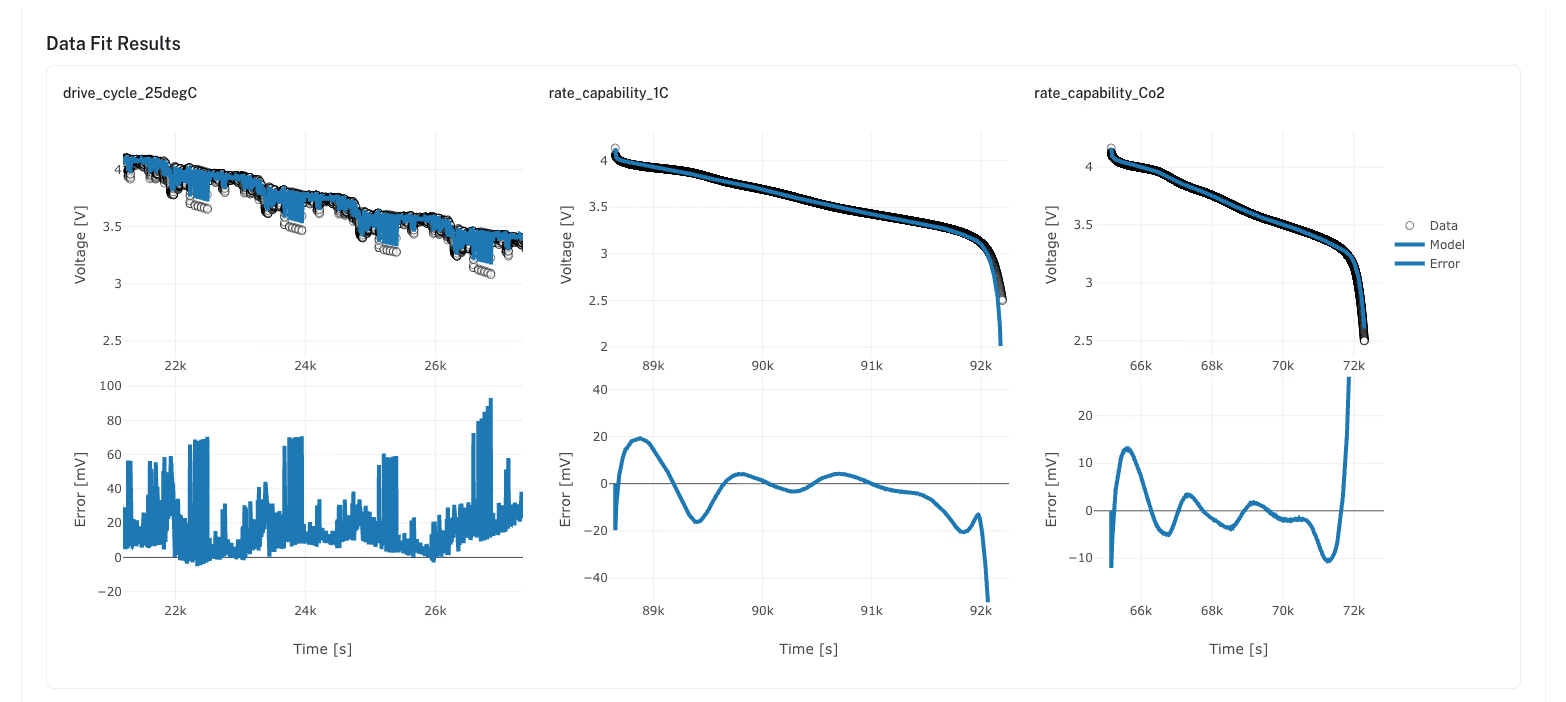
Fit physics-based models to your experimental data. Select a model type, define the parameters to estimate, and generate a parameterized model your team can trust across studies.
03
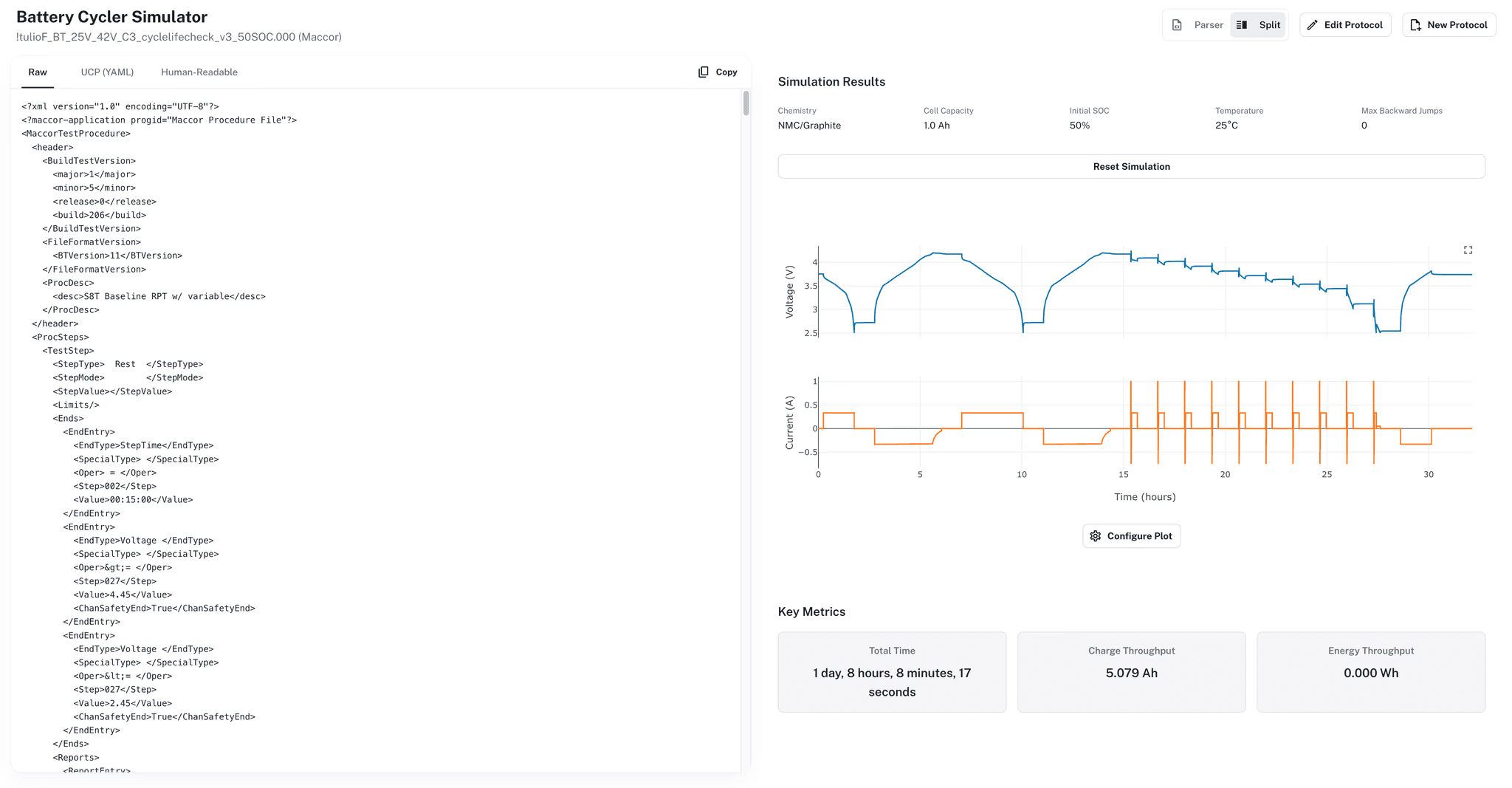
Predict
Run protocol simulations against parameterized models before committing cycler time. Evaluate fast-charge strategies, assess lithium plating risk, or compare internal states across cell designs.
04
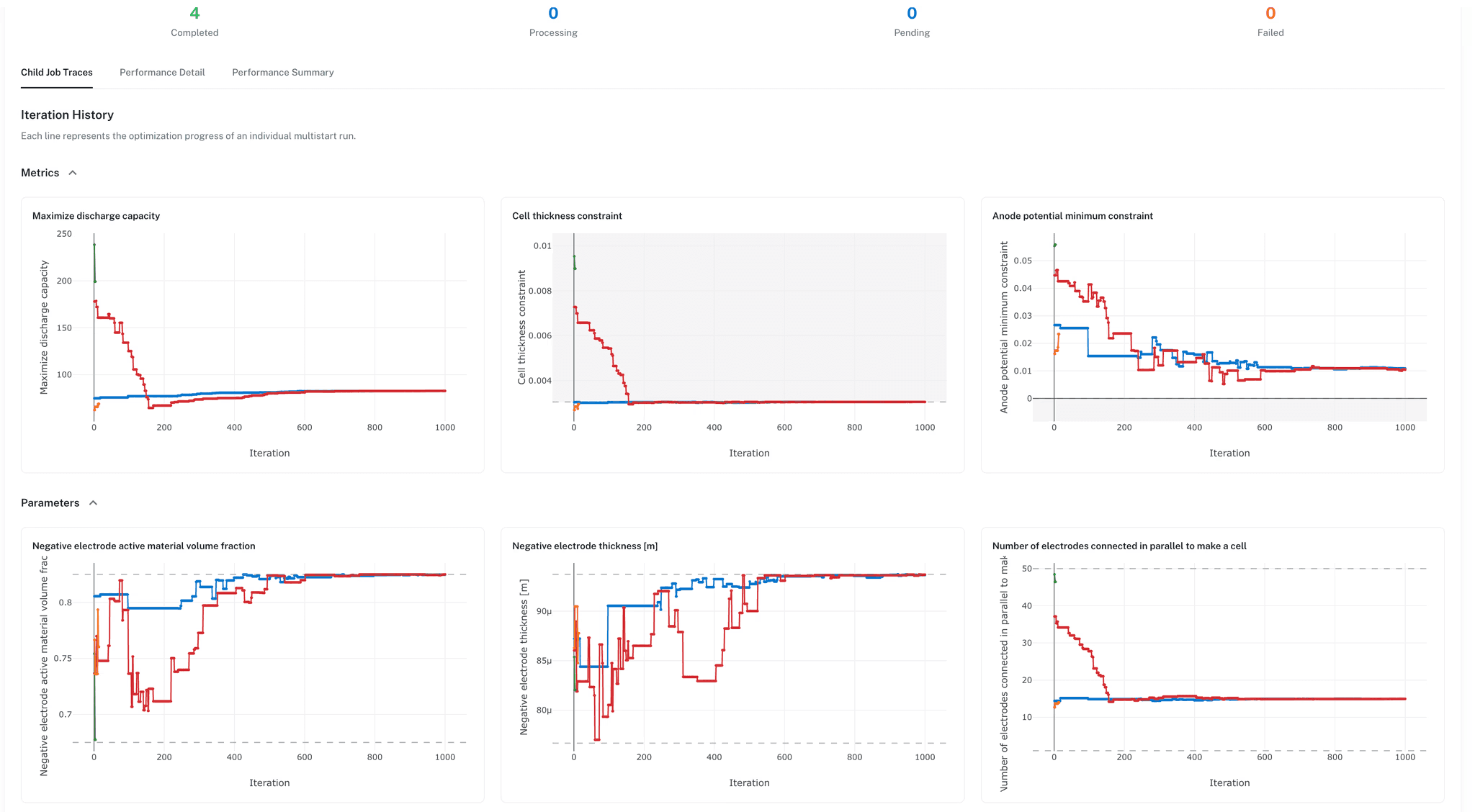
Optimize
Define engineering targets and search for the best design or protocol. Vary electrode thickness, porosity, loading, or charging strategy while managing degradation and plating constraints.
PyBaMM for battery teams
If your team is running DFN simulations, fitting parameters to half-cell data, simulating CCCV protocols, or assessing plating risk under fast charge — these are the workflows Ionworks Studio was built around.
Why teams outgrow notebooks
One engineer gets useful results quickly. Problems appear when a second engineer needs to reproduce that simulation, or when a team needs to trace which parameter set produced a particular prediction. Coordination and provenance do not fit naturally into notebook-based workflows.
The production layer
Ionworks Studio is not a replacement for PyBaMM. It is the production layer: the same physics, the same models, now organized around cells, projects, and parameterized models in a web environment the whole team can use.
Use cases
Fast charge protocol optimization
Find faster charging strategies while managing plating risk and capacity retention. Define your constraints and search the protocol space. Results are directly usable as test protocols on the bench.
Battery digital twin workflows
A parameterized model grounded in validated data is the starting point for a digital twin. Run cell-level studies, predict behavior under new conditions, and feed results into system-level decisions.
Battery parameter estimation
Upload cycling data, select the parameters to estimate, and generate a reusable parameterized model. Provenance is built in — the fitting process connects directly to your ingested data.
Battery performance analysis
Compare simulated scenarios against experimental data. Inspect voltage, temperature, and degradation indicators — every result stays linked to the model and protocol that produced it.
Battery protocol simulation
Evaluate charge-discharge protocols before running long physical tests. Compare variants side by side without tying up test channels.
Battery design optimization
Search design variables against engineering targets like energy density, power, or swelling limits. Every candidate is evaluated with validated physics.
Frequently asked questions
Is Ionworks a replacement for PyBaMM?
No. It operationalizes PyBaMM workflows for teams — same physics-based models, plus structured data management, parameterized models, and coordination features. Existing PyBaMM scripts do not need to be rewritten.
What kinds of battery data can Ionworks use?
`Maccor`, `Neware`, `Novonix`, `Arbin`, `BioLogic`, and other major cycler formats. Uploaded data is normalized and linked to cell context automatically.
Can teams run their own protocols and models?
Yes. Saved protocols, typed protocols, uploaded cycler files, or parameter sweeps. Parameterized models combine your model type, parameter sets, and cell specs into reusable assets.
Who is this for?
Battery engineers, electrochemical modelers, and R&D leads. If your team is fitting models to data, simulating protocols, or trying to make simulation workflows repeatable across a group, Ionworks Studio is worth evaluating.