
Show what your material does in a real cell
Electrolyte, anode, and cathode developers are asked the same question by every cell maker: what does this do in our cell? Ionworks Studio turns your material data into physics-based cell models, so you can answer it with a simulation before anyone builds a prototype.
Trusted by leading materials and battery teams


A coin cell is not the cell your partner builds
Coin cells are designed to screen materials, and they do that well. But the conditions that make them good screens also hide the constraints a commercial cell runs into: limited lithium inventory, lean electrolyte, thick electrodes, and long transport paths.
A material that looks strong at the electrode level can deliver less at the cell level than the incumbent it was meant to replace. Cell makers know this, which is why half-cell capacity alone rarely moves a qualification forward.
- Counter electrode
- Coin: Excess lithium metal
- Commercial: Graphite or silicon blend, N/P near 1.1
- Electrolyte
- Coin: Flooded
- Commercial: Lean, set by the cell design
- Areal loading
- Coin: Often below 1 mAh/cm²
- Commercial: 3 to 5 mAh/cm²
- Format
- Coin:
CR2032, a few cm² - Commercial:
21700jellyroll or large pouch
Where a thicker electrode stops paying off
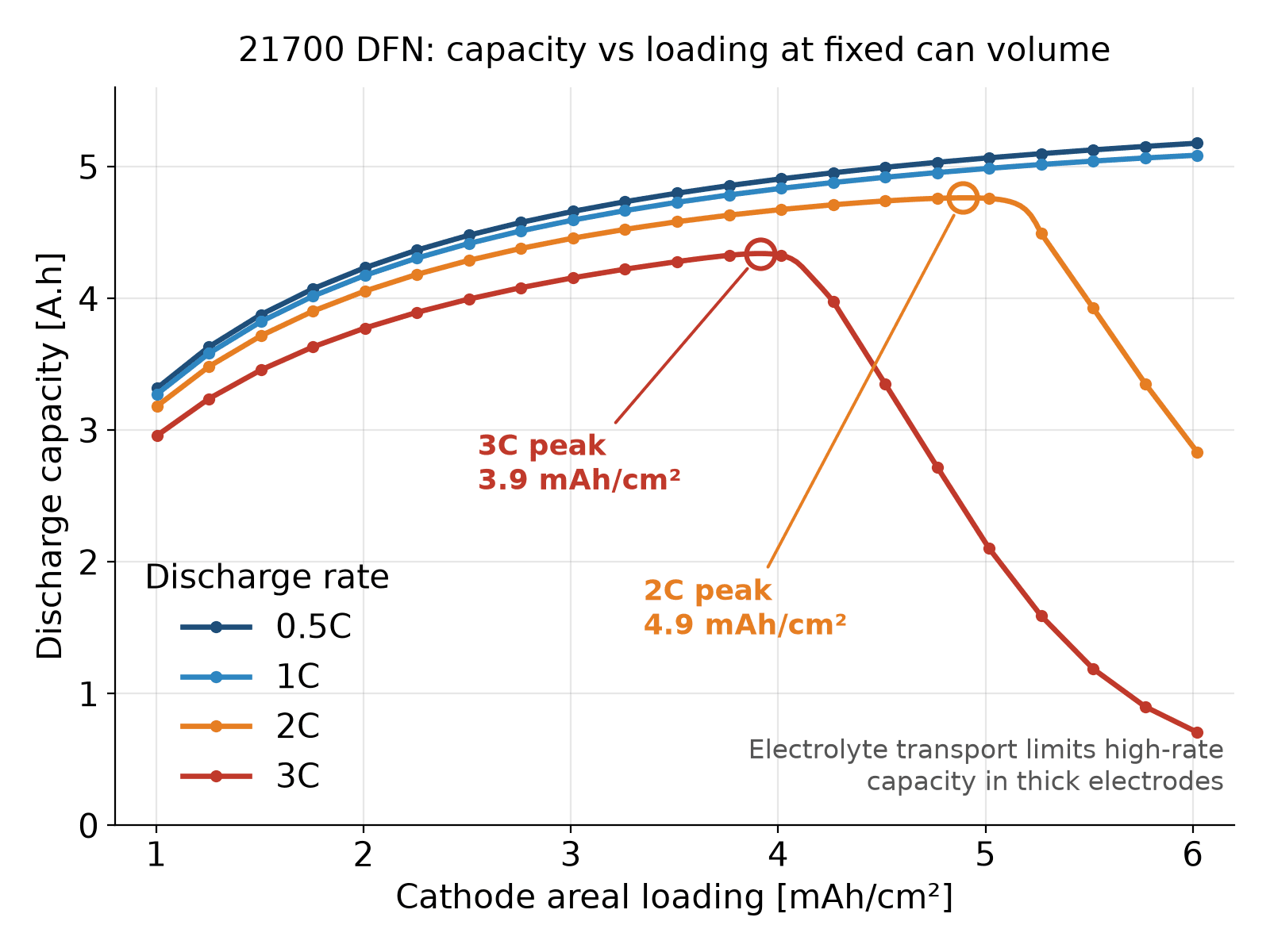
21700 DFN at fixed can volumeTake the loading row from the table. In a 21700 at fixed can volume, the sweep re-derives electrode width from the winding geometry at each loading, so a thicker coating trades separator and foil for active material. At 0.5C and 1C that trade keeps paying: capacity rises across the whole range.
At higher rates it stops. The 2C capacity peaks near 4.9 mAh/cm², and the 3C capacity near 3.9 mAh/cm². Past that, lithium ions can’t cross the thick electrode fast enough, the electrolyte depletes deep in the coating, and capacity falls away.
For an electrolyte developer, that peak is the number to move. Rerun the sweep with your own conductivity and transference number and see how far it shifts, before a single pouch cell is built.
How we work with materials teams
01Start from your material data
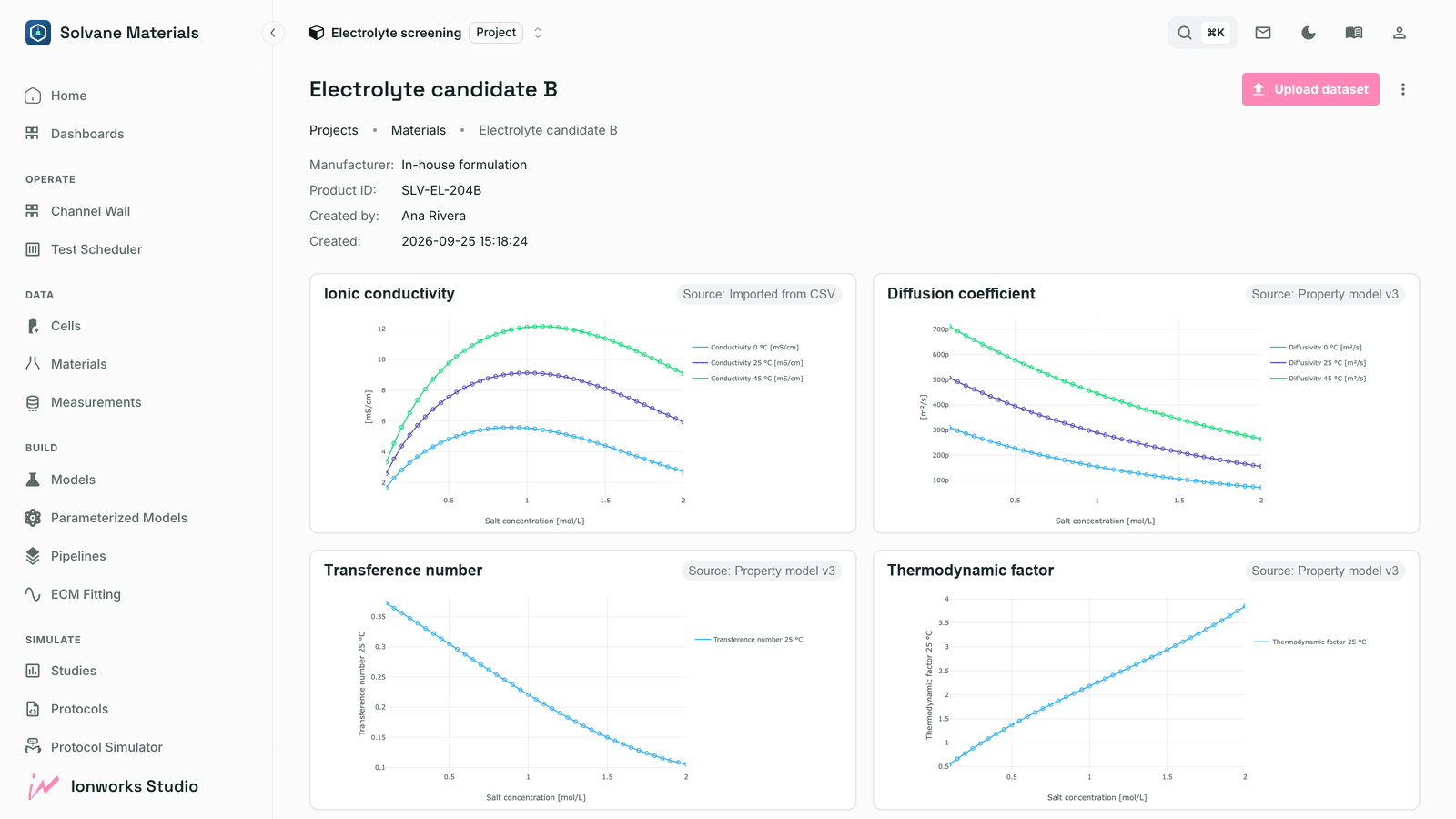
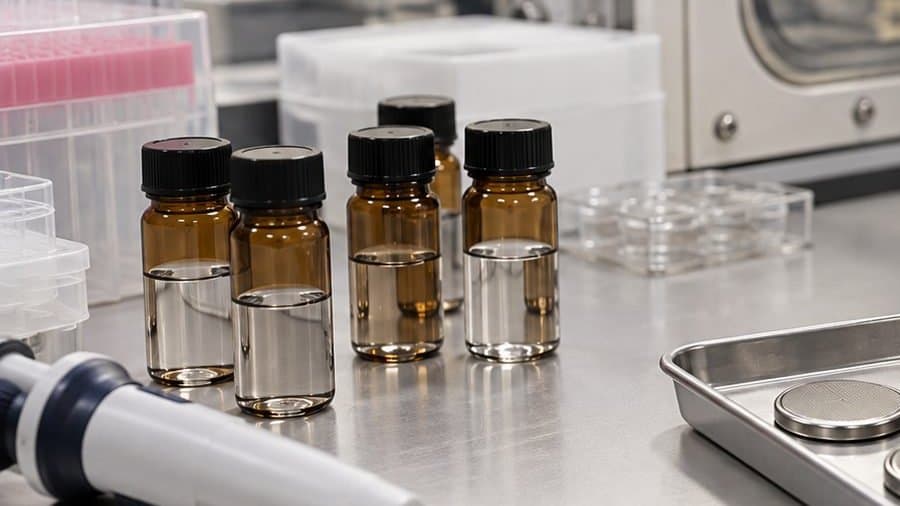
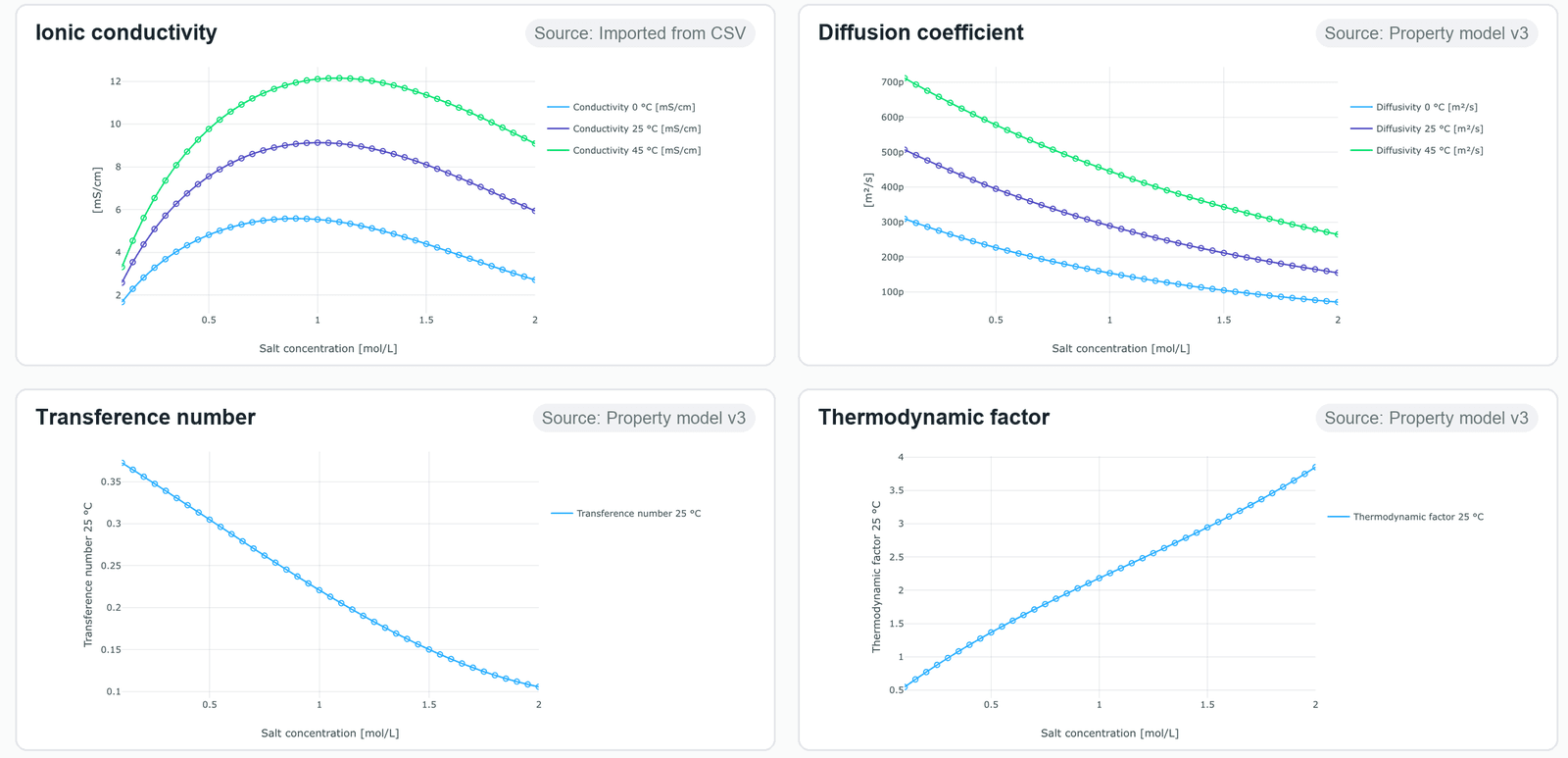
Measured properties or the output of your own property models: ionic conductivity, diffusivity, transference number, open-circuit potential, particle size. Coin-cell and half-cell tests fill in what property data alone cannot.
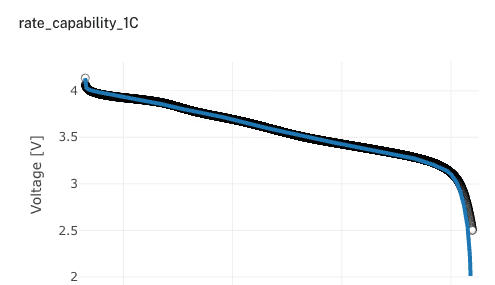
Measured (black) vs fitted DFN (blue), 1C discharge 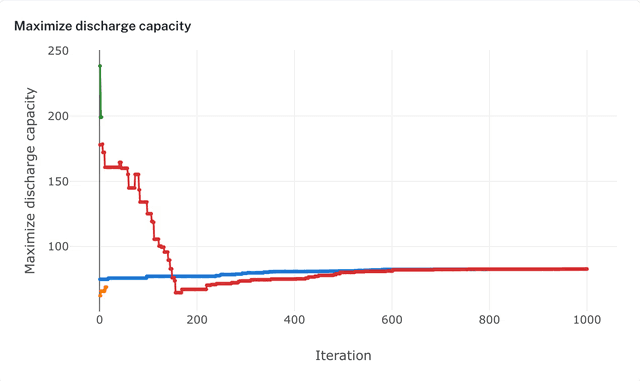
Discharge capacity over optimizer iterations, four multistart runs 03Put the material in a real cell
Place the parameterized material in a target design, from a
21700jellyroll to a large-format pouch, at realistic loading and N/P ratio. Run the protocols a cell maker cares about: fast charge, rate capability, drive cycles.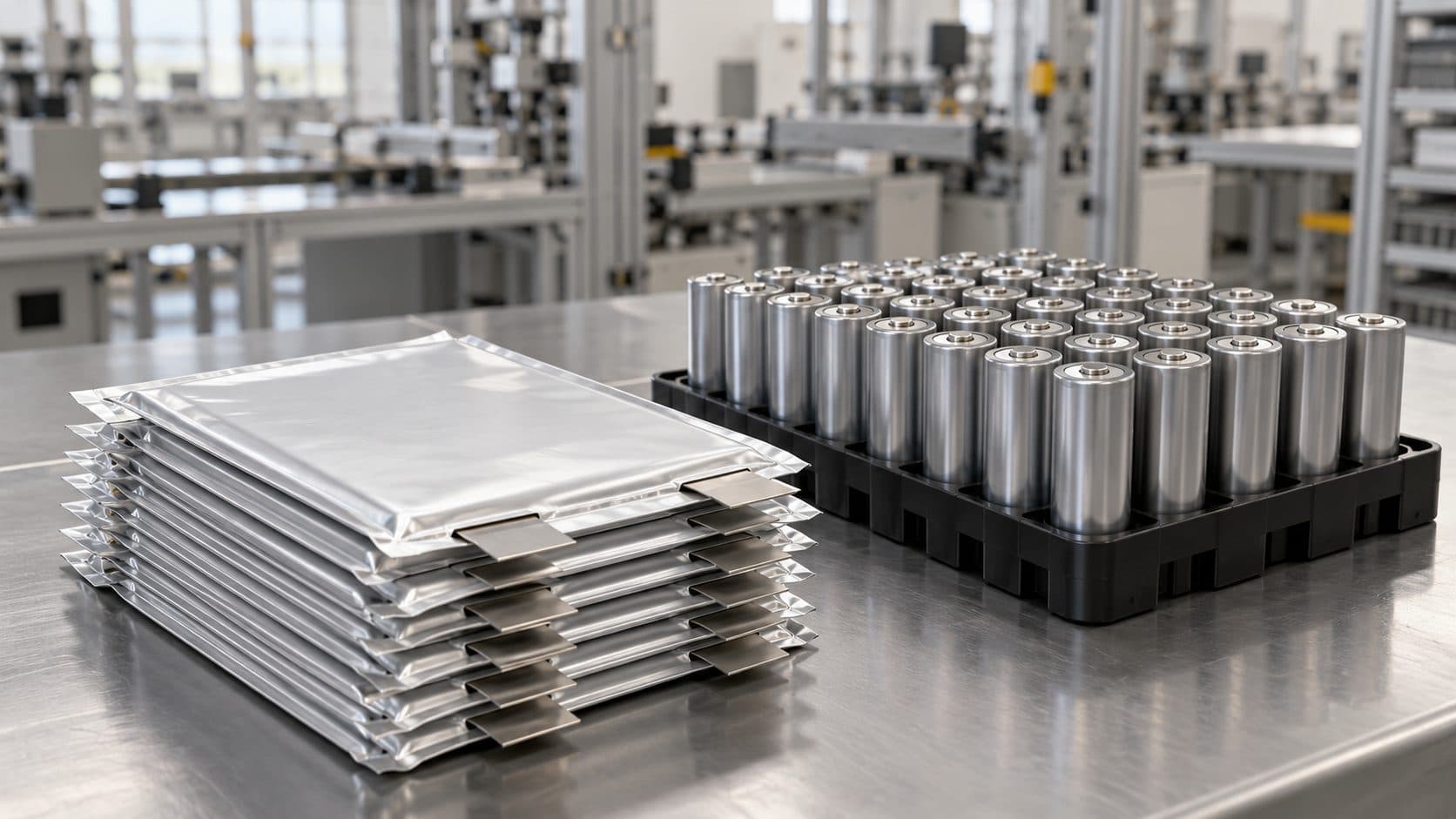
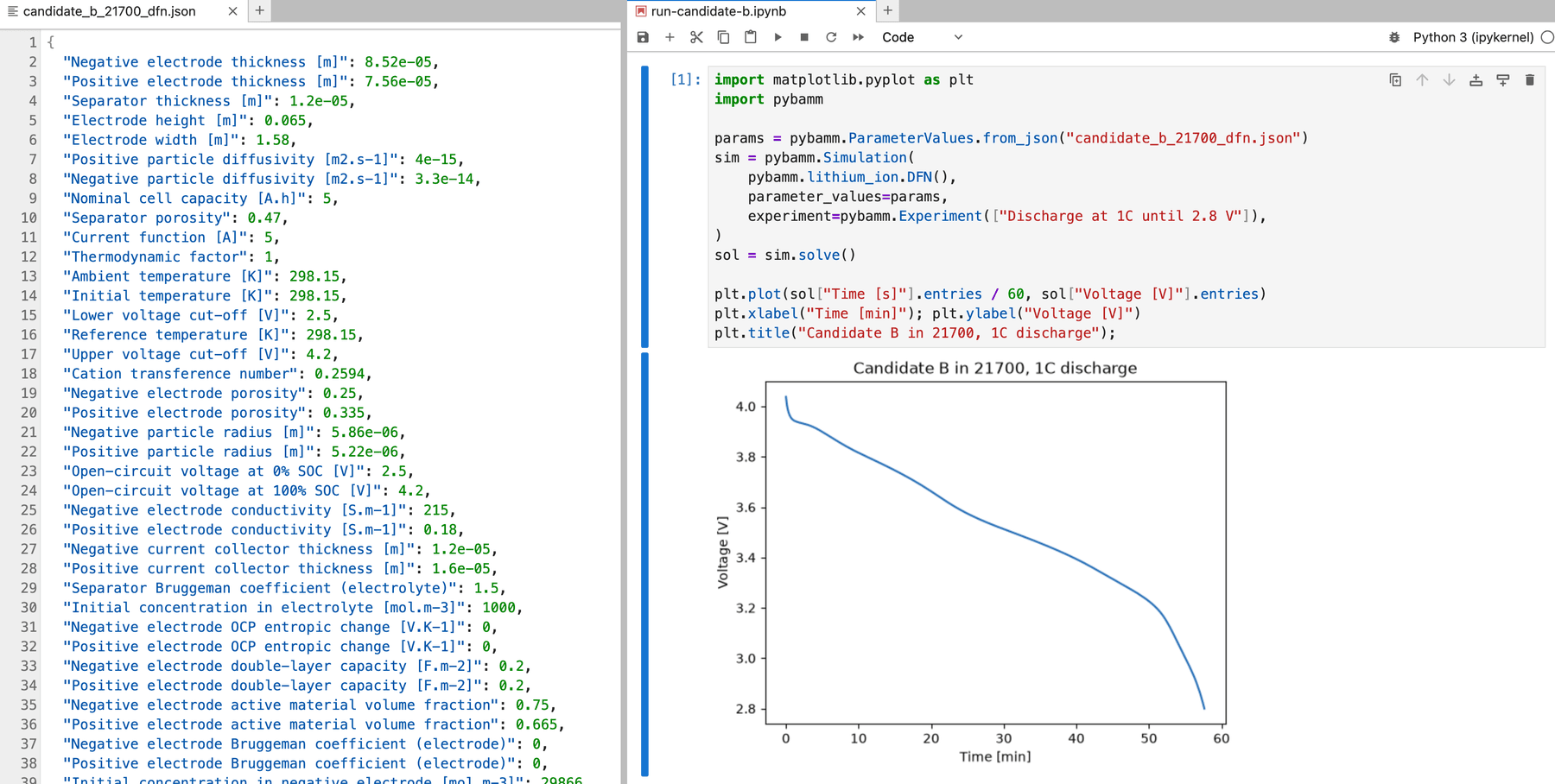
04Hand partners a model they can run
Hand a partner’s engineering team the parameterized cell model in an open-source format that runs in PyBaMM. They can run it in their own tools and test your material in their own design space before they build anything.
What teams use the model to answer
- How much does a higher transference number shorten a 10 to 80% fast charge in a
21700? - What blend ratio of silicon to graphite maximizes energy while staying inside the swelling budget?
- Does a fast-charge protocol developed for one chemistry stay plating-free on ours?
- What does our material add in Wh/kg at the cell level, not the electrode level?

At Anthro Energy, we develop novel polymer electrolyte materials and the models that predict their properties, from ion transport to mechanical and electrochemical behavior. Translating those material-level insights into confident predictions of how a full cell will perform is a different challenge, and that’s where Ionworks has been an exceptional partner.
Their team helped us build modeling and simulation workflows that take our material property predictions and show how they play out at the cell level. That has meaningfully sped up how quickly we can evaluate and integrate our new electrolytes into existing lithium-ion cell designs.
Ionworks brings deep expertise, responsiveness, and a genuinely collaborative approach, and they’ve become an important part of how we move from materials innovation to real-world cell performance.


We are working with Sila Nanotechnologies on the same workflow for silicon-carbon anodes: screening blend ratios, projecting swelling, and transferring fast-charge protocols across chemistries.
Frequently asked questions
DFN or SPMe model, which then runs in a target cell design, such as a 21700 jellyroll or a large-format pouch, at realistic loading and N/P ratio. The loading sweep above is one example: it shows where a thicker electrode stops paying off at each C-rate.See your material in a 21700 before anyone builds one
Bring property data or a set of coin-cell tests. We will walk through building a cell-level model from them and running it in the format your partners use.