
Battery modeling course
Master battery modeling with the team that built PyBaMM
A live, hands-on PyBaMM battery modeling course delivered by the developers behind the world’s most widely used open-source battery modeling library.
Three progressive streams take engineers from first install to custom electrochemical model development to advanced production usage. Online or on-site, with live Q&A throughout.
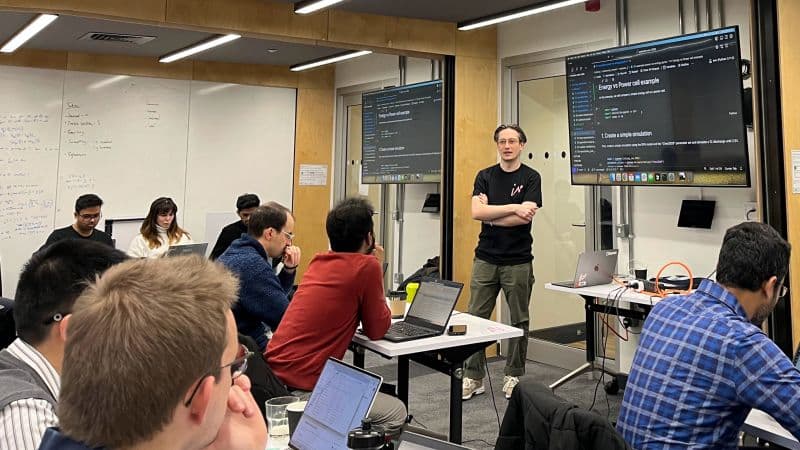
Why train with us
01
Taught by PyBaMM core developers
Sessions are led by the people who created and maintain the library. Your team gets answers from the source, not paraphrased documentation.
02
Hands-on, not slideware
Every stream is built around practical exercises. Engineers leave with notebooks they can adapt to their own cells, protocols, and parameter sets.
03
Interactive sessions, not webinars
Live Q&A throughout each session. Bring your own datasets, models, and edge cases. Discussion is part of the syllabus.
04
Online or on-site
Run sessions remotely for distributed teams or schedule in-person training at your office. Both formats cover the same material.

These trainings were excellent for getting up to speed on everything Ionworks / PyBaMM can do. The sessions were packed with practical examples and tailored exactly to our needs. The best part was the technical depth — the trainers shared a lot of in-depth battery knowledge in between the coding, which added great context. If you want to learn how to actually apply the software to battery science, this is the way to do it.

Course streams
Three streams, each roughly 6 hours of live instruction. Book one, two, or all three depending on where your team is starting from.
01
Intro to PyBaMM
For engineers new to PyBaMM
- Setting up and first steps
- Using the experiment class
- Changing parameters
- Plotting and managing outputs
02
Model development
For engineers ready to write their own models
- Understanding PyBaMM's expression tree
- How PyBaMM solves models
- Building a simple ODE model
- Building a simple PDE model
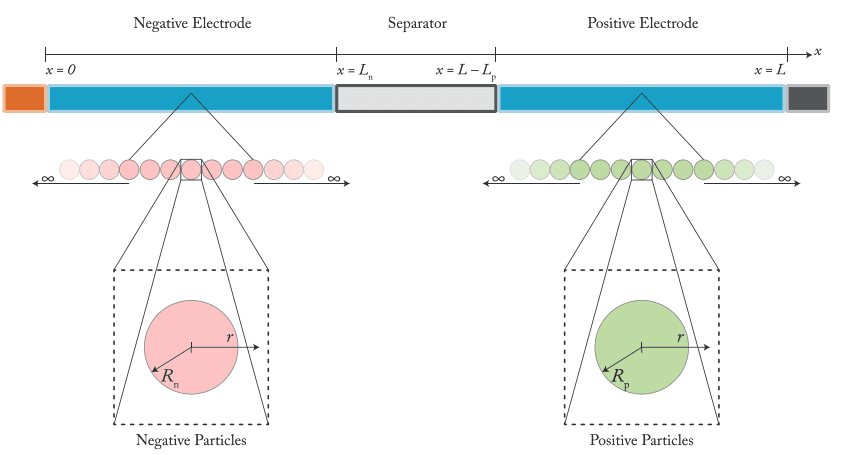
- Building the Single Particle Model
03
Advanced usage
For experienced PyBaMM users
- Advanced experiments: custom conditions, long experiments
- Performance optimization
- Working with model outputs
- Working with input parameters
Recommended group size: 5–20 participants per stream. Larger groups can split across multiple sessions.
Pricing
Per-person, per-stream pricing for corporate and research groups.
Online
$750
per person · per stream
Delivered remotely. Same material, same instructors, same exercises.
In-person
$1,000
per person · per stream
On-site at your office. Travel and accommodation billed separately at cost.
Frequently asked questions

Need us to do the modeling work instead? Battery simulation consulting from the PyBaMM team →
Train your team with the people who built PyBaMM.
Tell us about your team's experience level, the chemistries you work with, and your timeline. We'll put together a session that fits.